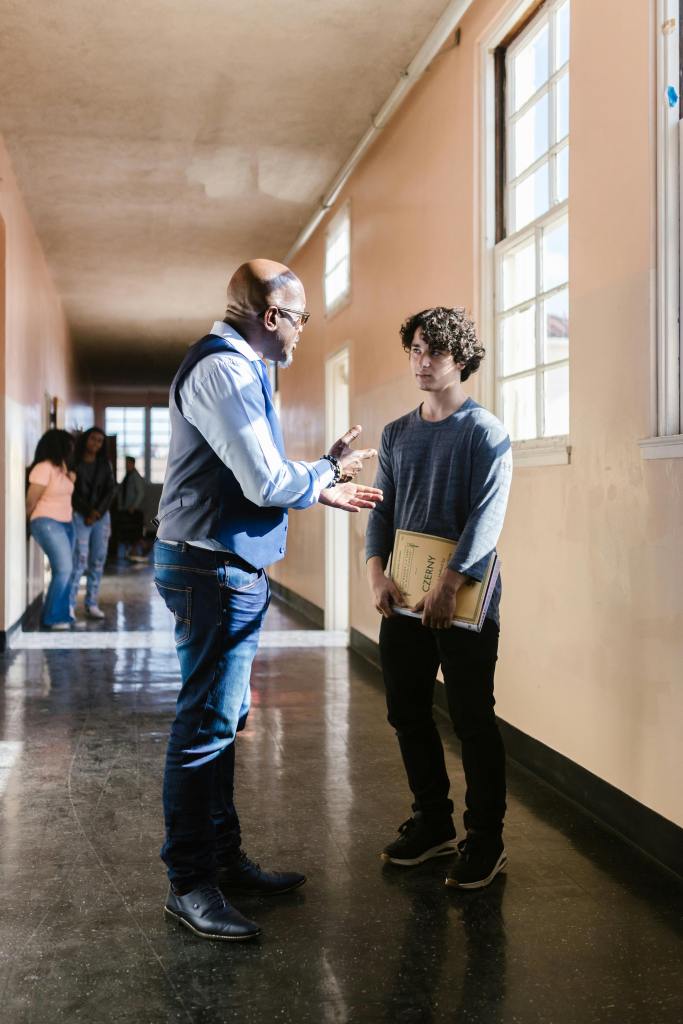
I read recently about a girl who found a mentor at her church who became her sounding board and connection to sanity. This relationship continued into adulthood, as she mined her mentor for nuggets of advice based on her lived experience. She even hosted her mentor in Europe when she was living abroad. (1) Mentoring relationships with adults who are not relatives can make a big difference in people’s lives. (2) Most of us with access to things like a little support, an encouraging word, or even a place to land when our plans fall through, don’t think about what life would be like if we didn’t have that.
The Gap Between Foster Youth and Successful Adulthood.
Foster youth are too often pushed off a cliff at the age of 18. (3) While there can be organizations offering help or financial assistance to them, they don’t always have anyone alongside them to show them the dotted line they need to sign to access the help. Just because people are adults by the numbers doesn’t mean the infrastructure of adulthood is straightforward. How many of us still forget to pay a bill or end a subscription after years of adulting? Having a guide to walk alongside them in the early years after high school can make a difference to foster youth for the rest of their lives. (4) A Mentor can be the person who keeps them on track, moving toward a life that will sustain them. (5)
Who are Mentors?
Mentors are people with some life experience, but not necessarily professional designations. (6). There aren’t licensure hoops to go through. Mentors have successfully made their way through young adulthood and have empathy for those who are just starting out. They might be able to encourage others to avoid some pitfalls, or just provide the pep talks needed for youth to hit deadlines, file necessary papers, or just show up to classes or work when they don’t feel like it.
Why Does Mentoring Matter?
Studies have been done among foster youth that show having a non-kin mentor can lead to being less stressed and depressed and a lower likelihood of getting arrested. (7) Even studies of youth that don’t have the complication of foster care in their lives show that mentorship can lead to fewer depressive symptoms and less sexual risk-taking. (8). These are just a few of the things that can change when a young adult has a mentor
What does a mentor do?
What a mentor does for a young adult can vary. Mentors can meet with young adults weekly or monthly. (9) Maybe they can be a sounding board to listen to the struggles someone is facing. Saying your struggles out loud to a person who respects what you are going through can make a difference in your sense of value. Being able to pause and think can interrupt instincts that might lead to an outcome that could be hard to live down or pivot away from. Sometimes the best support can be doing an activity together. Mentors can play basketball or go for a walk. (10) They can take a mentee to a symphony concert or musical that they might not otherwise attend. These experiences can broaden their understanding of the world and the possibilities that could lie ahead for them. The absence of specific language or offering advice doesn’t mean that meaningful knowledge isn’t changing hands. It doesn’t necessarily take words to convey respect, patience, or kindness.
Another valuable insight a mentor can offer is simple observation. Sometimes, as a young person goes through the motions day after day, they drown in the present. It can help to have someone alongside them who remembers the position they were in six months or a year ago. Dr. Adam Anthony, who is seeking to promote mentorship for foster youth, remembers how important this information was for him when he received it from his own mentors. “ Anyone who I’ve had the privilege of being mentored by was able to see not just who I am in that moment, but the potential of who I could be, and also the work and the growth that I’m actually doing to get me to that place.” (11)
Making Time to Meet This Need Isn’t Easy, but Can Make a Big Difference.
It isn’t always easy to find people willing to offer their time to meet with a young adult on a regular basis who may or may not be interested in chatting, walking, or whatever activity the mentor decides is the best way to connect. Many organizations nationwide and locally try to facilitate the connection. Big Brother/Big Sister clubs are in many cities across the country. (12) Often, county children and family services organizations put together ways to mentor foster youth that don’t require you to be a licensed foster parent. Churches can also facilitate interaction between interested adults and youth. Taking the time to invest in a young adult can make a difference not only to them but to the rest of society.(13) Their success can mean less stress on communities to support them later. It can also inspire youth to mentor the next generation of people, adding positively to the world. (14)
Sources
- Alpin, Jana. “Why Your Child Needs A Mentor (Who Isn’t Mom or Dad).” Mom Fabulous, http://www.momfabulous.com/why-your-child-needs-a-mentor-who-is-not-mom-or-dad/ .
- S., Alyssa. “Mentoring and the Foster Care System: Alyssa’s Story.” Mentoring.org, 22 May 2023, mentoring.org/blog/foster-care/mentoring-and-the-foster-care-system-alyssas-story/ .
- Armstrong-Heimsoth, Amy, et al. “Former Foster System Youth: Perspectives on Transitional Supports and Programs.” Pubmed Central, 25 Apr. 2021, pmc.ncbi.nlm.nih.gov/articles/PMC7518090/.
- Zimet, Mira. “Mentoring Foster Youth Fills Gap In a Rocky System.” The Imprint, 16 Sept. 2014, imprintnews.org/opinion/mentoring-foster-youth-fills-gap-in-a-rocky-system/8104 .
- “The Importance Of Mentorship For Children in Foster Care.” ShoutoutUK.org, 12 Dec. 2023, http://www.shoutoutuk.org/2023/12/12/the-importance-of-mentorship-for-children-in-foster-care/ .
- “Spotlight on Youth Mentoring.” Annie E Casie Foundation, 24 Jan. 2024, http://www.aecf.org/blog/spotlight-on-youth-mentoring.
- Munson, Michelle R., and J Curtis McMillen. “Natural Mentoring and Psychosocial Outcomes among Older Youth Transitioning From Foster Care.” Pubmed Central, 1 Jan. 2010, pmc.ncbi.nlm.nih.gov/articles/PMC2630481/.
- Zimmerman, Marc A. “Natural Mentors, Mental Health, and Risk Behaviors: A Longitudinal Analysis of African American Adolescents Transitioning into Adulthood.” Pubmed Central, 1 Sept. 2011, pmc.ncbi.nlm.nih.gov/articles/PMC2922467/.
- “Mentor.” WashoeCounty.gov, 2026, bethefam.washoecounty.gov/mentor/#:~:text=Once%20matched%2C%20mentors%20are%20encouraged,growth%20and%20overall%20well%2Dbeing.
- Nalls, Chris. “Youth Villages calls for more male mentors to support foster youth.” Fox 17, 12 Jan. 2026, fox17.com/news/local/youth-villages-calls-for-more-male-mentors-to-support-foster-youth.
- Spiering, Charlyn. “Using Mentorship to Bridge the Gap for Young Men in Foster Care with Dr. Adam Anthony.” Adoption Uncovered, 16 Apr. 2026, adoptionuncovered.com/2026/04/16/using-mentorship-to-bridge-the-gap-for-young-men-in-foster-care-with-dr-adam-anthony/ .
- “Changing Lives for the Better, Forever.” Big Brothers Big Sisters, 2026, http://www.bbbs.org/programs/#:~:text=Changing%20Lives%20for%20the%20Better,impact%20all%20over%20the%20nation. .
- “10 Ways How Community-Based Mentorship Changes Lives.” Big Brothers Big Sisters, bbbsli.org/ways-how-community-based-mentorship-changes-lives/#:~:text=Community%2Dbased%20mentorship%20is%20a,%2C%20neighborhoods%2C%20and%20future%20generations.
- Thompson, A. E., et al. “Youth aging out of foster care may have a more difficult time forming bonds with adults due to their experiences, having a mentor may act as a protective factor against the negative outcomes typically.” The Chronicle of Evidenced Based Mentoring, 2016, http://www.evidencebasedmentoring.org/youth-aging-foster-care-may-difficult-time-forming-bonds-adults-due-experiences-mentor-may-act-protective-factor-negative-outcomes-typically/ .

